



 Back to Blogs
How to Choose an Energy-Efficient Front Door for Your Home
It's easy to overlook the front door when you're thinking about energy efficiency. Windows get most of the attention, and insulation in the walls and attic tends to come up before doors do. But your entry door works hard every single day – sealing out cold mountain air in winter, keeping conditioned air inside during summer, and holding its own against whatever weather the Blue Ridge decides to send your way. When it starts to fall short, your heating and cooling system picks up the slack, and your energy bills reflect it.
The good news is that choosing a more energy-efficient front door isn't complicated once you know what to look for. The right materials, the right ratings, and the right fit for your home's style can make a big difference in your comfort, your monthly costs, and the way your home looks from the street. Here's what you need to know.
What type of front doors are energy efficient?
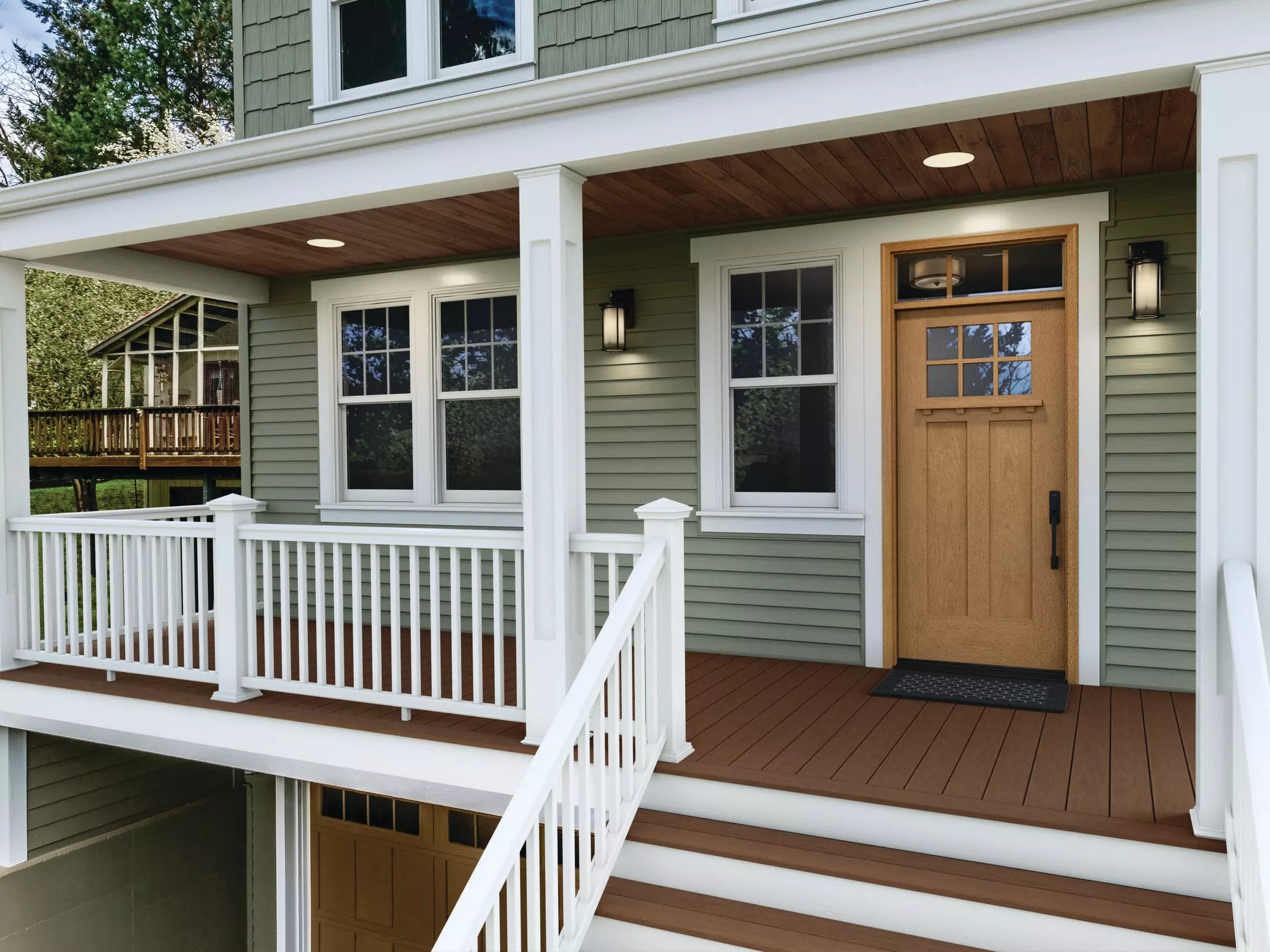
By far, the single factor that will affect the quality and energy efficiency of your front door the most is the material. Pick the wrong material, and your door might not perform well enough come winter.
Generally, exterior front doors are made from fiberglass, steel, or wood. Here’s a look at how they measure up:
Fiberglass:
- Highly durable and resistant to the mountain weather that area homeowners know well – it won't rot, rust, dent, or warp over time.
- Can be molded to mimic the look of real wood grain with impressive accuracy, so you don't have to sacrifice aesthetics for performance.
- Provides excellent insulation, with R-values ranging from R-6 to R-8+ – the highest of the three materials.
- Offers great long-term value, with minimal maintenance required after installation.
Steel:
- A strong, secure option that tends to have the lowest initial cost of the three.
- Easier to dent than fiberglass, and prone to rust over time – especially in damp or high-humidity conditions.
- Provides solid insulation (R-5 to R-6), though it falls short of fiberglass on thermal performance.
Wood:
- The most customizable option, with a natural warmth and character that's hard to replicate.
- Requires consistent upkeep. Regular painting or staining is necessary to keep moisture from causing warping or deterioration.
- Provides the least insulation of the three materials (R-2 to R-4) and carries the highest upfront cost.
We’ve mentioned R-value a few times at this point, but what is it? Put simply, R-value measures a material's resistance to heat flow – the higher the value, the better the insulation.
Out of all the door materials we looked at above, fiberglass has the highest R-value range at R-6 to R-8+. Meanwhile, insulated steel comes in at R-5 to R-6, and wood ranges from R-2 to R-4. From a pure energy-efficiency perspective, fiberglass is the clear winner. If durability is part of your decision, here's how long a fiberglass door lasts compared to steel and wood.
That said, if your heart is set on another material for aesthetics or other reasons, the R-value of a door can be improved with a few additions or minor tweaks. These include adding weatherstripping, applying door sweeps, using foam to seal gaps, installing insulation panels to the interior of the door, or adding a storm door.
Bottom line? Fiberglass is the most energy-efficient choice, but every front door material can work depending on your budget, maintenance preferences, and willingness to put in some extra effort.
How to read energy performance ratings

Shopping for a new front door can feel like stepping into a foreign language – U-factors, SHGC ratings, fenestration coefficients. The good news is that once you know what the labels are actually telling you, the decision gets a lot clearer.
The most important label to look for is the one from the National Fenestration Rating Council (NFRC), the independent organization that has been testing and rating the energy performance of windows and doors for over 35 years. If a door doesn't carry an NFRC label, it hasn't been independently verified – so that label is your first signal that a product has actually been put to the test.
The two main ratings on that label are U-factor and Solar Heat Gain Coefficient (SHGC):
- U-factor measures how well the door resists heat escaping from inside your home – think of it as the door's insulating power. The lower the U-factor, the better the door holds heat in, which matters especially during Blue Ridge winters when temperatures can drop sharply overnight.
- SHGC applies primarily to doors with glass panels and measures how much of the sun's heat passes through the glass and into your home. A lower SHGC keeps solar heat out – helpful in summer – while a higher SHGC lets more warmth in, which can work in your favor during colder months. In a mountain climate like ours, where you're managing both cold winters and warm summers, finding the right balance between these two extremes is worth a conversation with your installer.
What ENERGY STAR certification actually means
Beyond the NFRC label, there's one more certification you should look out for: ENERGY STAR. You've probably seen the blue logo on appliances, but on an exterior door, it means something specific: The product has been independently tested and verified to meet strict energy performance standards set by the U.S. Environmental Protection Agency.
That's a key third-party stamp of approval that tells you the door has been climate-tested, that its insulated core performs as advertised, and that its Low-E glass – which reflects heat while still letting natural light through – meets a verified standard. According to ENERGY STAR, certified doors can reduce energy bills by up to 13% annually, which definitely adds up over the life of a door.
Window World of the Blue Ridge carries a range of ENERGY STAR qualified entry doors, each backed by a permanent NFRC certification label on the packaging so you know exactly what you're getting before installation day.
Choosing the right look for your front door
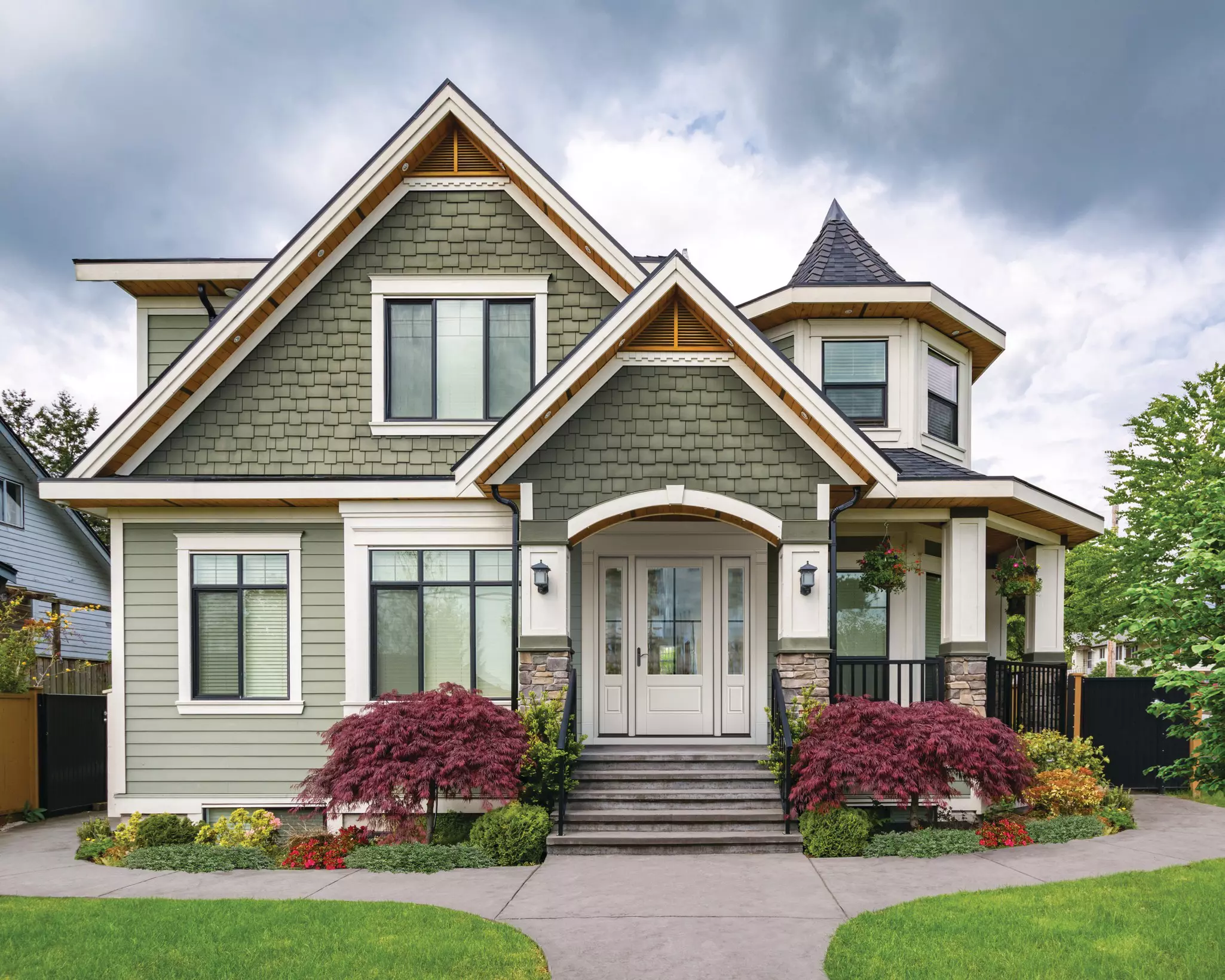
Energy performance matters, of course. But so does loving the way your front door looks every time you pull into the driveway. The good news is that today's entry doors give you plenty of room to express your home's personality without compromising on quality or efficiency.
Style and texture
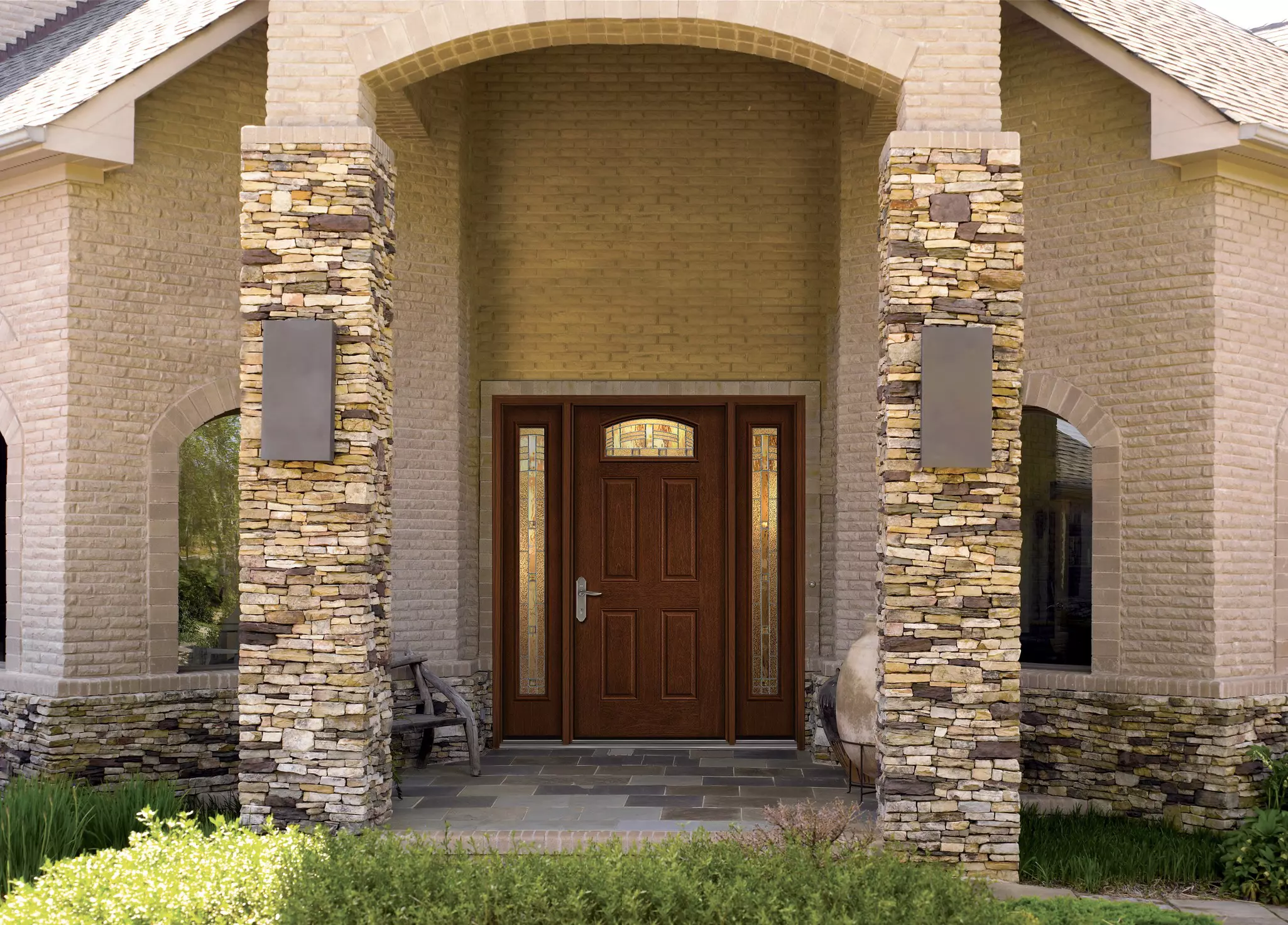
The three main surface finishes you'll encounter are smooth, woodgrain, and modern, any of which might be perfect for your home’s look. Here’s a breakdown:
- Smooth doors have a clean, painted look that suits contemporary and transitional homes well
- Woodgrain doors are finished to replicate the texture and warmth of real wood – without the warping, rotting, or repainting that comes with the real thing – making them a natural fit for craftsman, farmhouse, and traditional homes throughout our region
- Modern doors tend to feature sleeker lines, larger glass panels, and bolder geometric profiles for homeowners who want a more architectural statement at the entry
Color
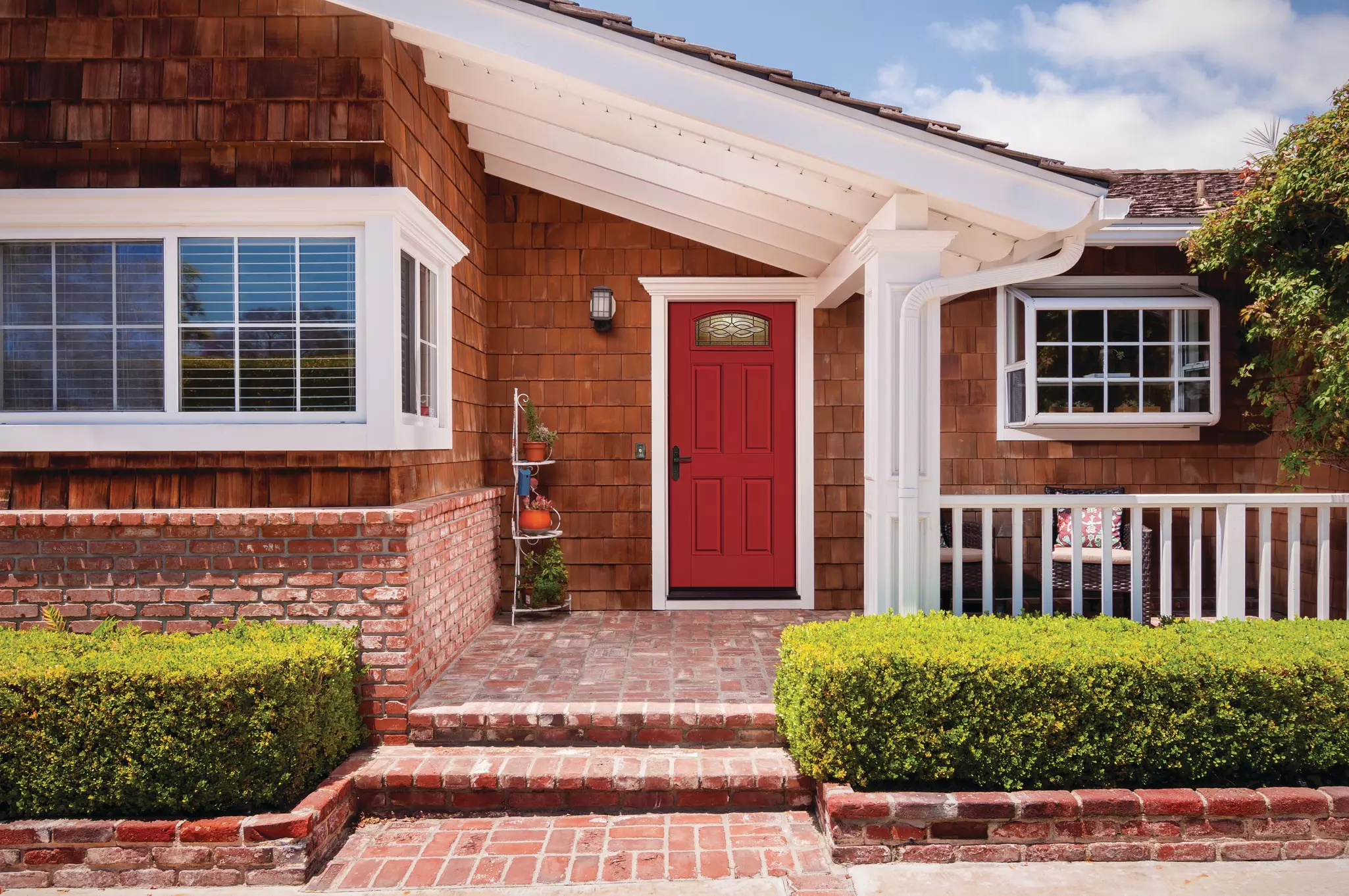
This is where it gets fun. Entry doors are available in a wide range of colors, from timeless neutrals like black, white, and slate gray to richer tones like deep navy, forest green, and warm walnut.
A front door is one of the few places on a home's exterior where a bold color choice really works since it's a small surface area with a big visual impact. If you're unsure where to start, a good rule of thumb is to look at the fixed elements of your home's exterior – things like brick, stone, siding color, and roof tone – and choose a door color that either complements them warmly or contrasts them intentionally.
Glass and hardware
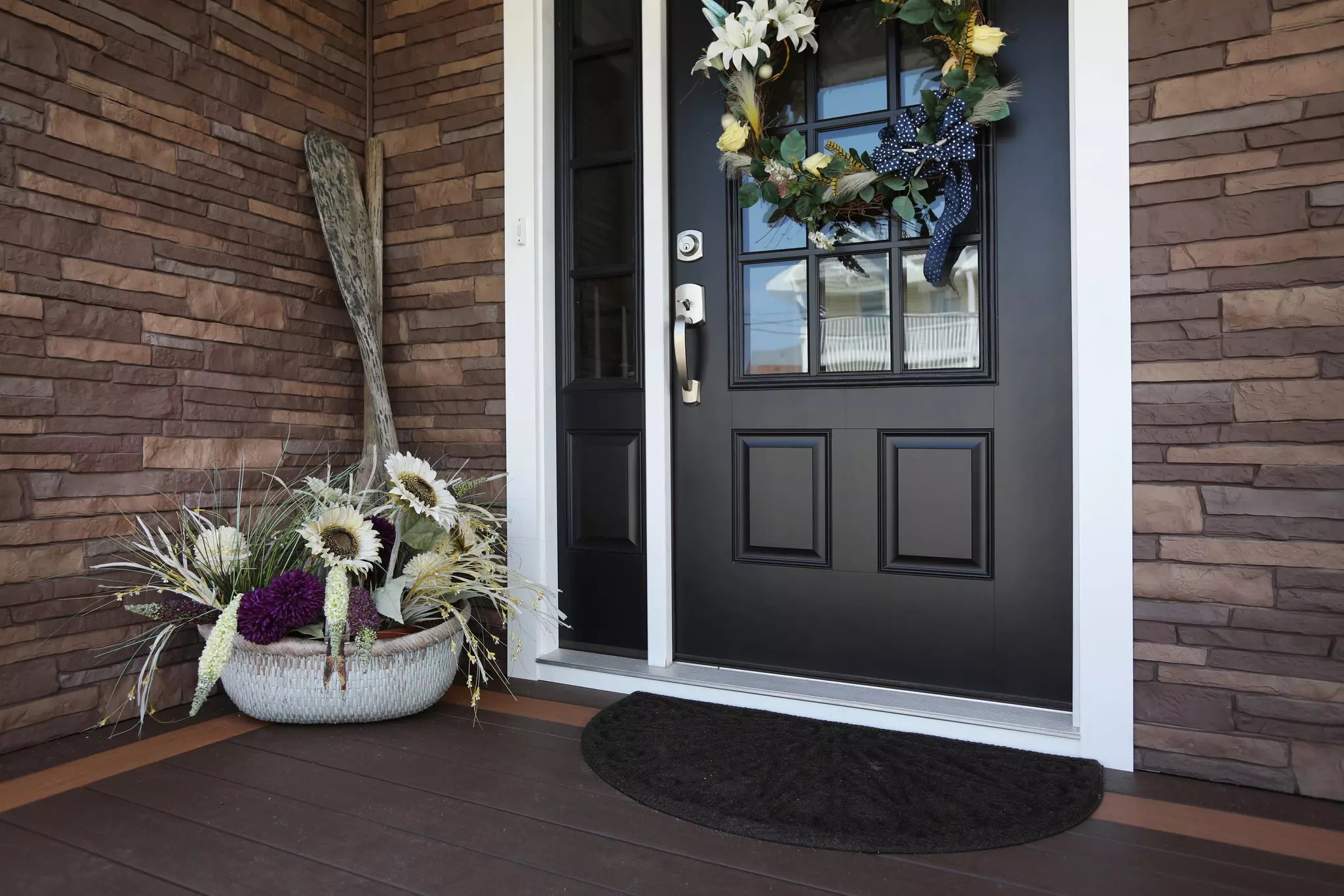
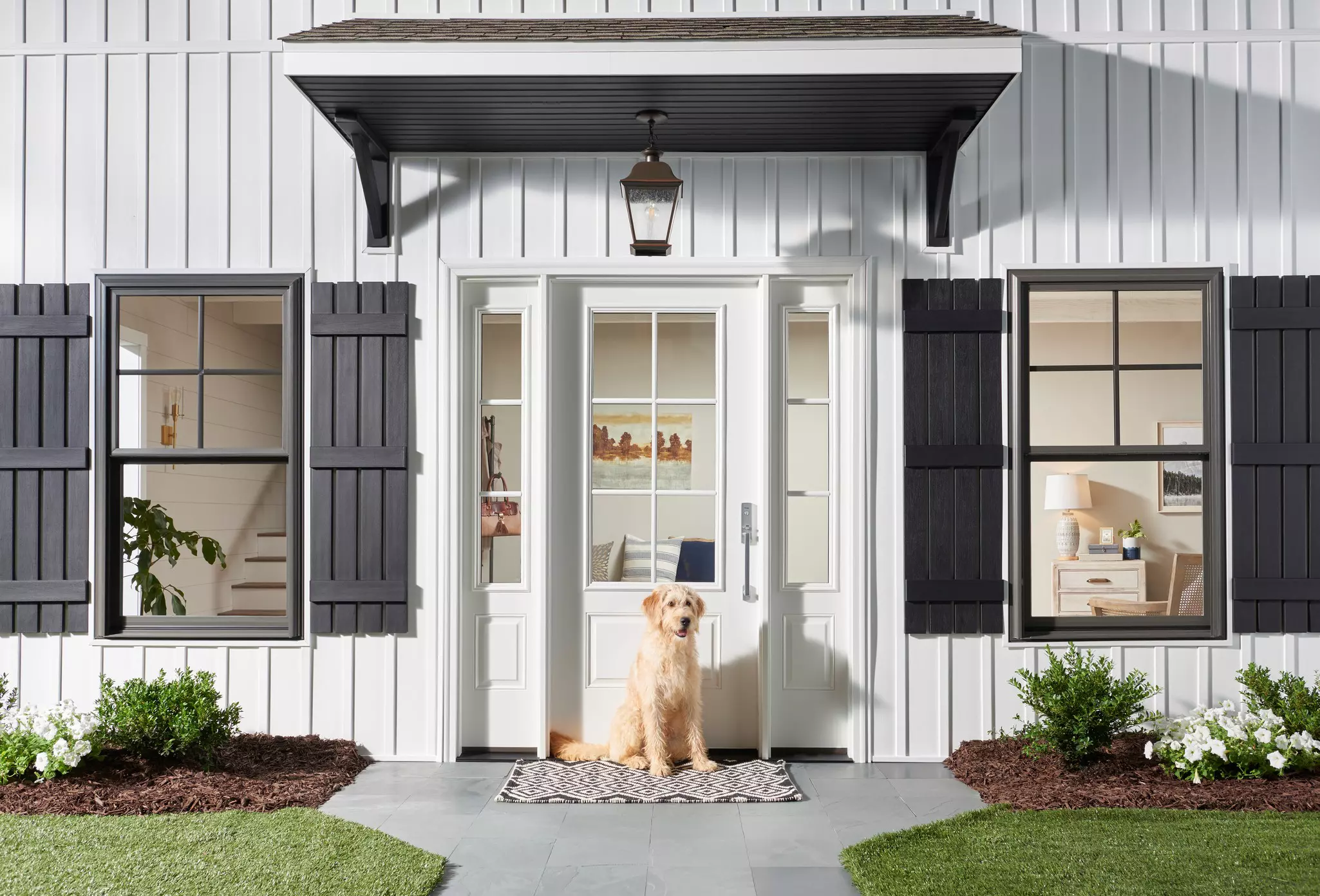
For doors with glass panels, the placement and size of the glass affect both privacy and light. Sidelites – narrow glass panels on either side of the door – open up an entryway and bring in natural light without sacrificing much privacy.
There’s also decorative glass with subtle textures or patterns, which let light through while keeping the view in both directions nicely obscured. Hardware – handlesets, locks, hinges, and kickplates – might seem like a finishing detail, but it ties the whole look together, so it's worth choosing finishes that coordinate with the rest of your exterior.
The real-world benefits of a new front door
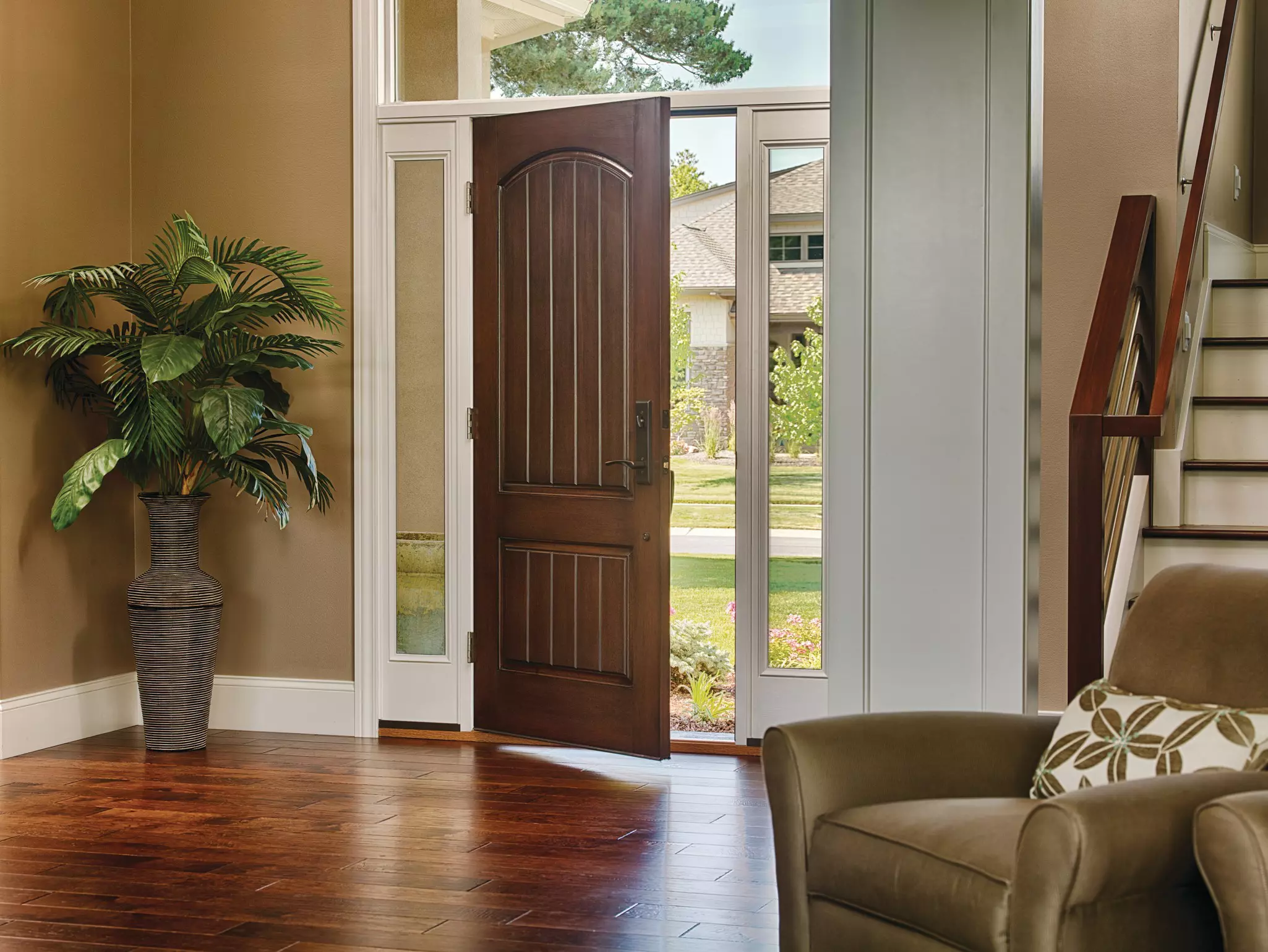
It's easy to think of a front door replacement as a purely cosmetic upgrade, but for most homeowners, the practical benefits end up being just as compelling as the visual ones.
Comfort and energy savings
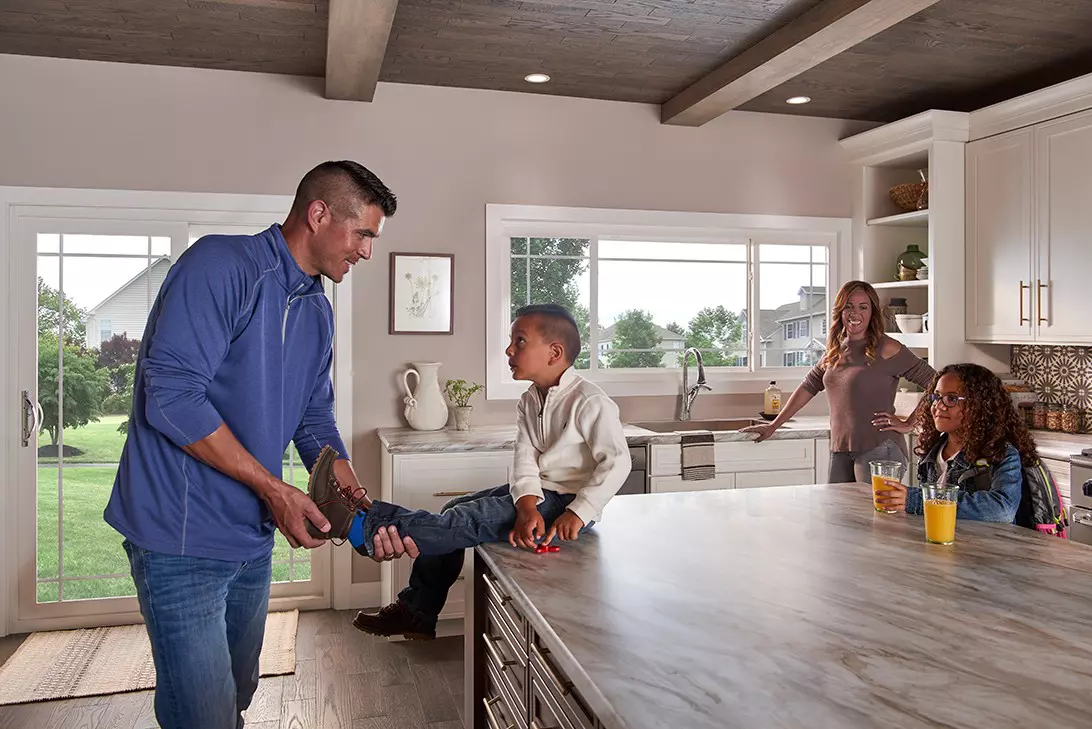
A well-insulated front door stops the two things that quietly drive up energy bills: air leakage and heat transfer.
When your door seals properly, your heating system isn't working overtime to compensate for cold air sneaking in around the frame, and your home holds a more consistent temperature throughout. For area homeowners, where cold snaps can arrive quickly and linger, that kind of reliable performance makes a noticeable difference in both daily comfort and monthly costs.
Curb appeal and home value
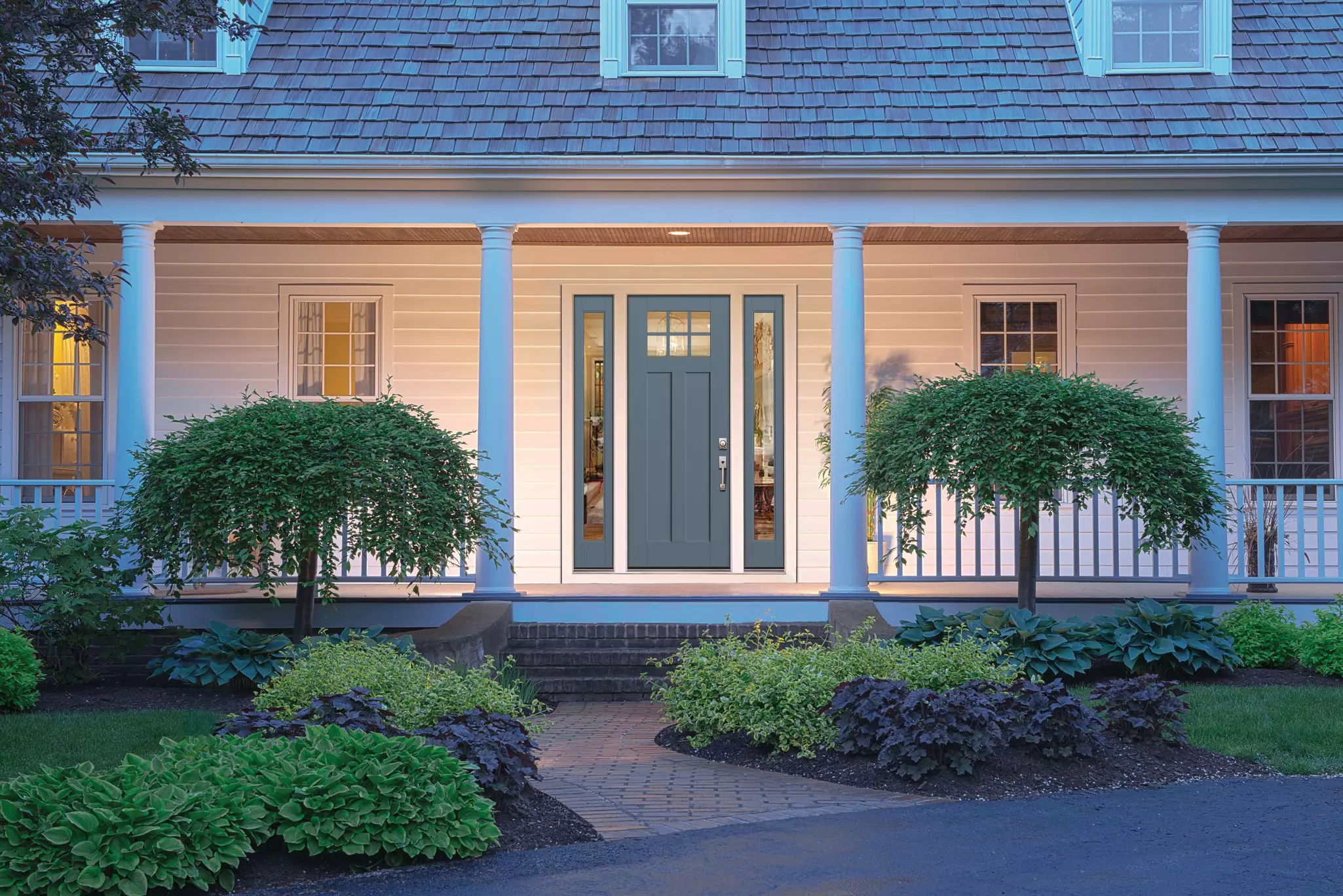
Your front door is one of the first things anyone sees when they pull up to your home – and a dated, worn, or faded door does your house no favors. A new entry door is one of the higher-return exterior upgrades you can make, both in terms of immediate curb appeal and long-term resale value. With the range of styles, finishes, and colors available today, it's also one of the easier ways to give your home a fresh, intentional look without a full exterior overhaul.
Noise reduction and security
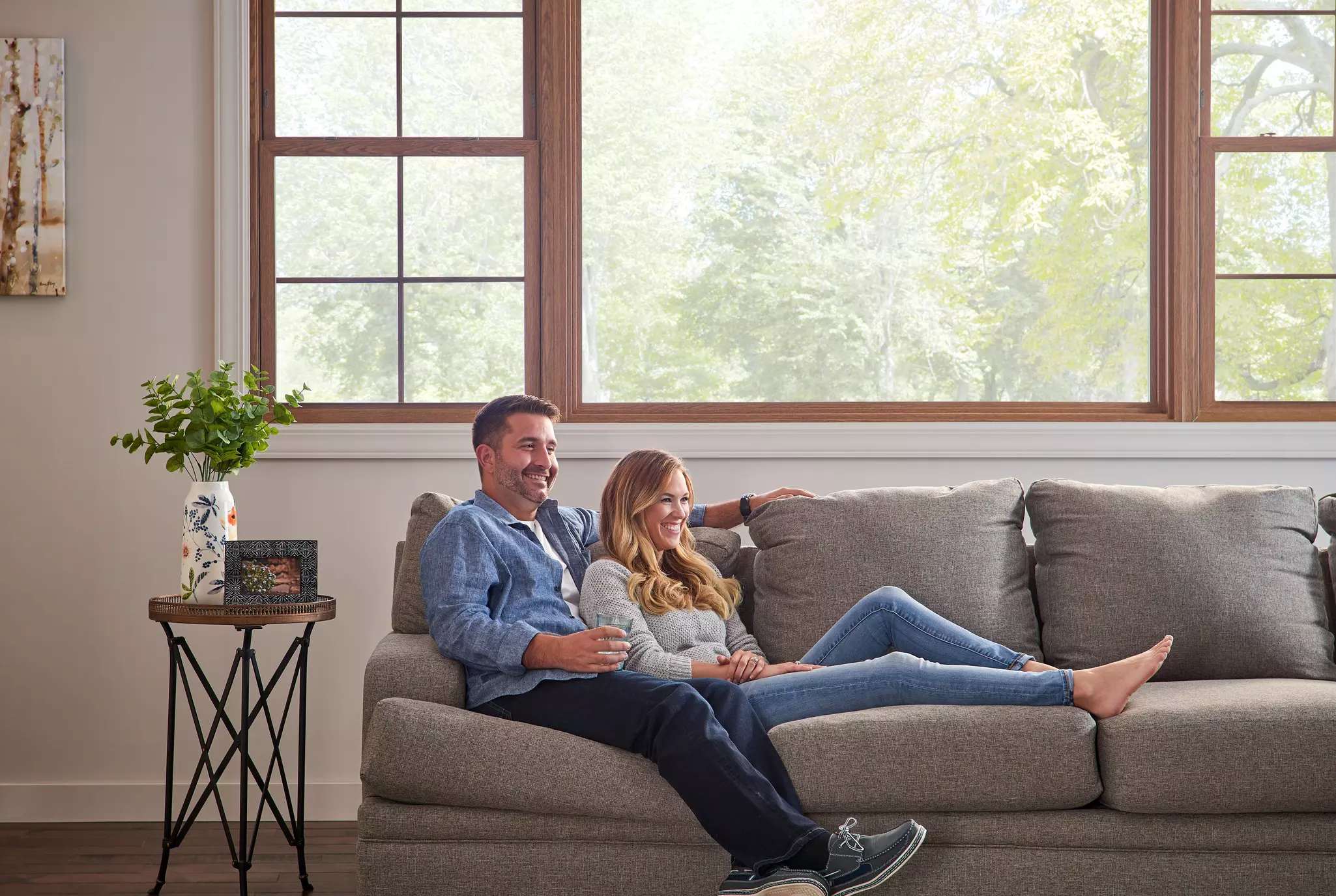
A quality insulated door does a pretty good job of dampening outside noise, and modern entry doors are significantly more secure than older models. Multi-point locking systems, reinforced frames, and impact-resistant materials have come a long way as well, so if your current door has seen better days, a replacement is an upgrade in terms of security just as much as looks.
Get energy-efficient exterior doors from Window World of the Blue Ridge
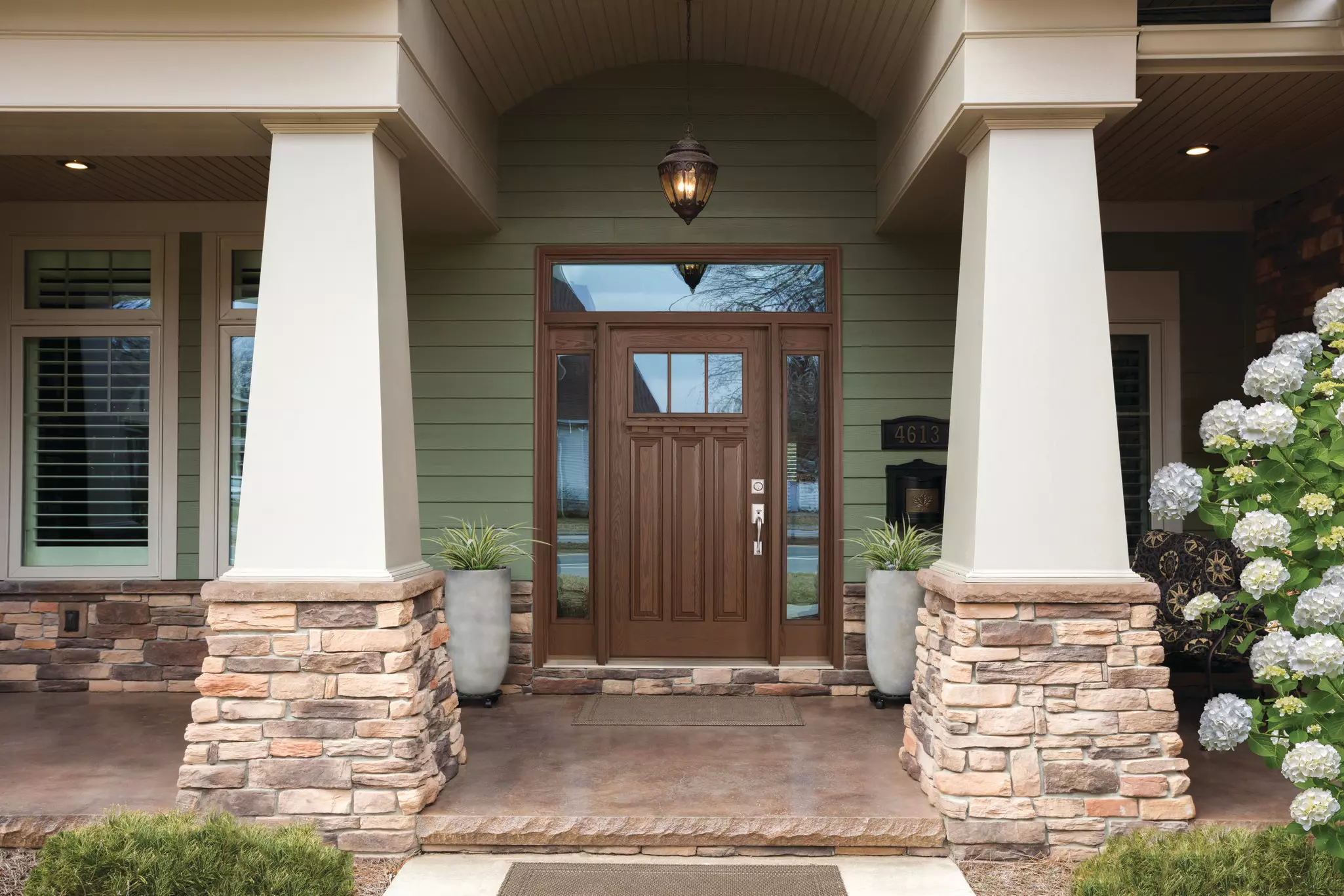
A new, energy-efficient front door could be just what you need to make your home feel (and look) like new. And with the right team of expert professionals, renovating your home could be easier than you think.
Window World of the Blue Ridge offers free in-home estimates for homeowners throughout Wilkesboro, Boone, Blowing Rock, and the surrounding Blue Ridge communities. Whether you're replacing a front door, adding a storm door for extra protection against mountain weather, or exploring your full options, we can help. Request your free quote to get started.